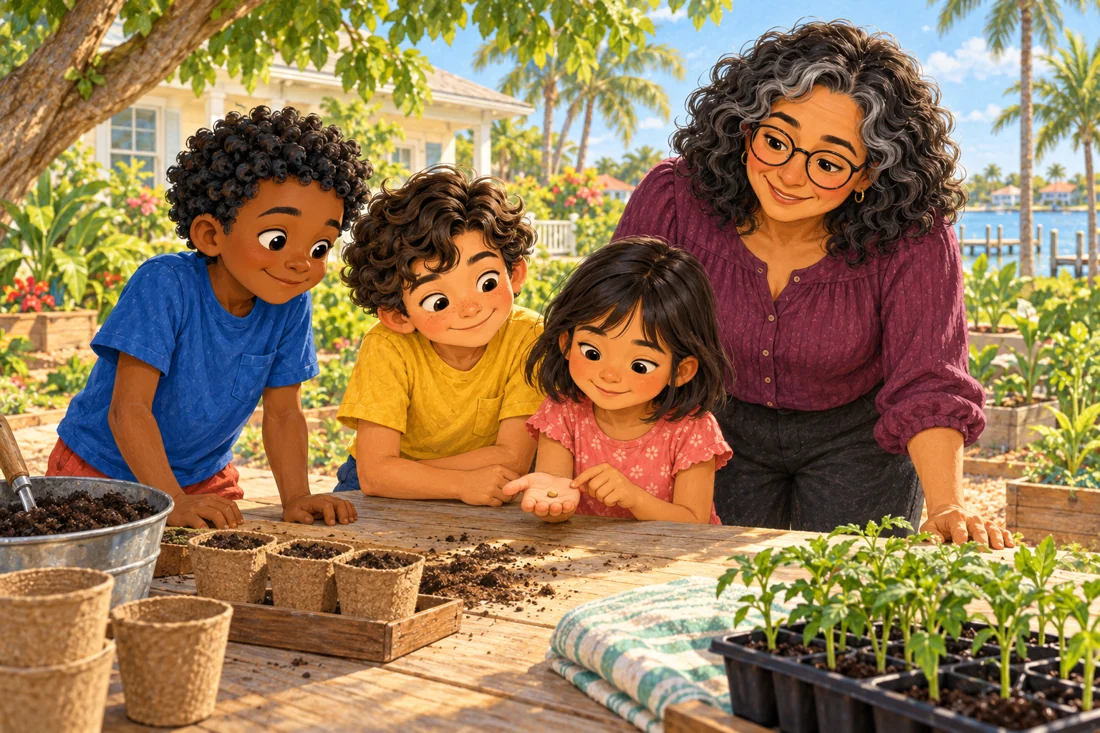
Ten small missions. Plenty of questions. Explore with a trusted grown-up, at your own pace. You can plant, observe or use the paper-only alternatives.
Always free. No child account, name, photo or email needed. Your checkmarks last only while this page stays open. Printed sheets stay with your family or class.
FREE · STEP 1 OF 10
With Book 1: The Yard Next Door
Start a Seed Corner
Bring along
A trusted grown-up, untreated tomato seeds sold for planting, a clean small pot with drainage, seed-starting mix, water, and paper.
Try together
Ask a grown-up to help choose a locally suitable seed and planting season. Read the packet together.
Have the grown-up check drainage. Moisten the mix and plant at the packet's depth.
Give the pot the warmth and light the packet recommends. Check moisture; keep it damp, not soggy.
Draw what you see. Sprouting time varies. If nothing grows, ask what you could change and try again.
Grow safely
Do not eat seeds, mix, or seedlings. Keep small seeds away from mouths. Wash hands after gardening. A sprout is for growing, not a snack.
Another way to join in
No planting space yet? Draw a seed corner and observe a grown-up's plant.
Wonder about it
What changed above the mix? What might be happening below it?
A grown-up, a clean tray, a small adult-approved garden soil sample or container mix, a magnifier if available, and paper.
Try together
Let a grown-up choose a safe sample. Never collect beside roads, spills, animal waste, or unknown chemicals.
Look for particles, old plant pieces, and spaces. Sketch what you can actually see.
Notice differences between a garden soil sample and a container mix. They do not have to look the same.
Return the sample where the grown-up directs. Make a shared plant-care plan that begins with observing.
Grow safely
Do not taste or breathe in loose soil or mix. Keep it away from food. Avoid dusty material; a grown-up can lightly dampen it. Cover cuts and wash hands afterward.
Another way to join in
Use a photograph or draw a soil world with particles and spaces.
Wonder about it
What did you see? What might be present but too small to see?
A grown-up, paper, pencil, and a permitted place to observe.
Try together
Choose a patio, balcony, school corner, or a place in a drawing. Ask before visiting or changing it.
Observe sunlight, shade, paths, water access, and what people already do there.
Draw one possible small planting place. Keep paths and play space.
Add three grown-up questions: Is the site safe? Which plants fit? Who will care for them when we are away?
Grow safely
Do not dig, move containers, install water systems, or plant on shared land without responsible adult permission. Grown-ups check utilities, soil, water, and access.
Another way to join in
Design a pretend corner on paper, using what you know about light and space.
Wonder about it
How could your plan care for both plants and people?
A grown-up, paper or clean picture cards, and examples such as a dry leaf and a fresh vegetable peel.
Try together
With a grown-up, sort drawings or clean examples into suitable fresh plant scraps and suitable dry materials.
Make a separate do-not-add list for a simple home compost bin: meat, dairy, oils, pet waste, sick plants, and unknown treated materials.
If a grown-up already manages compost, observe from a safe distance and record one change over time.
Let the grown-up manage moisture, mixing, pests, and when the compost is ready.
Grow safely
Do not open, stir, touch, or sniff moldy compost. Children with relevant allergies or breathing concerns can use pictures only. Wash hands. Do not use raw manure or pet waste.
Another way to join in
Picture sorting teaches the same idea without a compost bin.
A grown-up, paper, a pencil, and a safe flower-viewing place.
Try together
Ask a grown-up to choose a viewing spot away from nests, stings, roads, and sprayed areas.
Watch from a respectful distance for a short comfortable time. You may see no visitors.
Draw what you actually notice: a landing, a visit, a movement, or no movement.
Wonder which locally suitable flowers could provide habitat in an approved place.
Grow safely
Do not touch, catch, chase, feed, or approach insects or nests. People with sting allergies need their grown-up's safety plan. Never taste flowers you find.
Another way to join in
Observe through a window or use a grown-up-selected nature video or photograph.
Wonder about it
What do you know from watching, and what is still a question?
A grown-up, paper, pencil, and a safe adult-approved plant.
Try together
Look at the whole plant. Draw a leaf and any change you notice.
Ask a grown-up to help observe both sides without harming it. Record only what you actually see.
Visit again if allowed. Is damage changing? Is the plant still growing?
Let the grown-up identify any problem and choose whether help is needed.
Grow safely
Do not touch unknown insects, spiders, nests, or damaged plants. Do not mix sprays or use pesticides. Wash hands after gardening. Observe sprayed areas only when an adult says it is safe.
Another way to join in
Compare two grown-up-selected plant photographs.
Wonder about it
Which part of your record is an observation, and which part is a guess?
A grown-up, one adult-identified food, paper, and a pencil.
Try together
Choose a food with a grown-up. It can come from a garden, market, or shop.
Draw the journey you know: growing, harvesting, traveling, or preparing. Put a question mark where you are unsure.
If you prepare or taste it, wash hands and let the grown-up check allergies and food safety.
Share one thing you learned. Listening or drawing counts as taking part.
Grow safely
Eat only food a responsible adult identifies and approves. Wash produce under clean running water, not soap. Adults handle knives, storage, and food-service decisions.
Another way to join in
Use a photograph and draw the food's possible journey without eating it.
Wonder about it
Who helped this food reach your table? What could you share besides food?
A grown-up, paper, pencil, and a willing person to share with.
Try together
Draw one small food-growing idea for a real or imaginary place.
Add the questions your grown-up needs to check: plants, light, safe water and materials, permission, and ongoing care.
Share the idea with someone who wants to listen. Ask what their place needs.
Choose one supervised next step, or keep learning on paper. Starting small counts.
Grow safely
Ask permission before changing shared spaces. Do not send seeds or plants to another area without grown-up checks of suitability and movement rules. Adults supervise tools, tasting, and care.
Another way to join in
Teach a friend one observation from a book, photograph, or a plant you can safely see.
Wonder about it
Which idea can travel, and which choice needs local advice?