One pot
A grown-up checks the container, drainage and locally appropriate seeds or plant. Follow its instructions for warmth, light, water and timing.
For parents & guardians
Begin with permission, local advice and a plan you can keep caring for. A pot or a paper observation is enough to take part.
What can we grow where we live?
Check your season, temperature, sunlight, rainfall, water, space and locally suitable plants. USDA hardiness zones describe winter cold; they don't give a vegetable planting calendar.
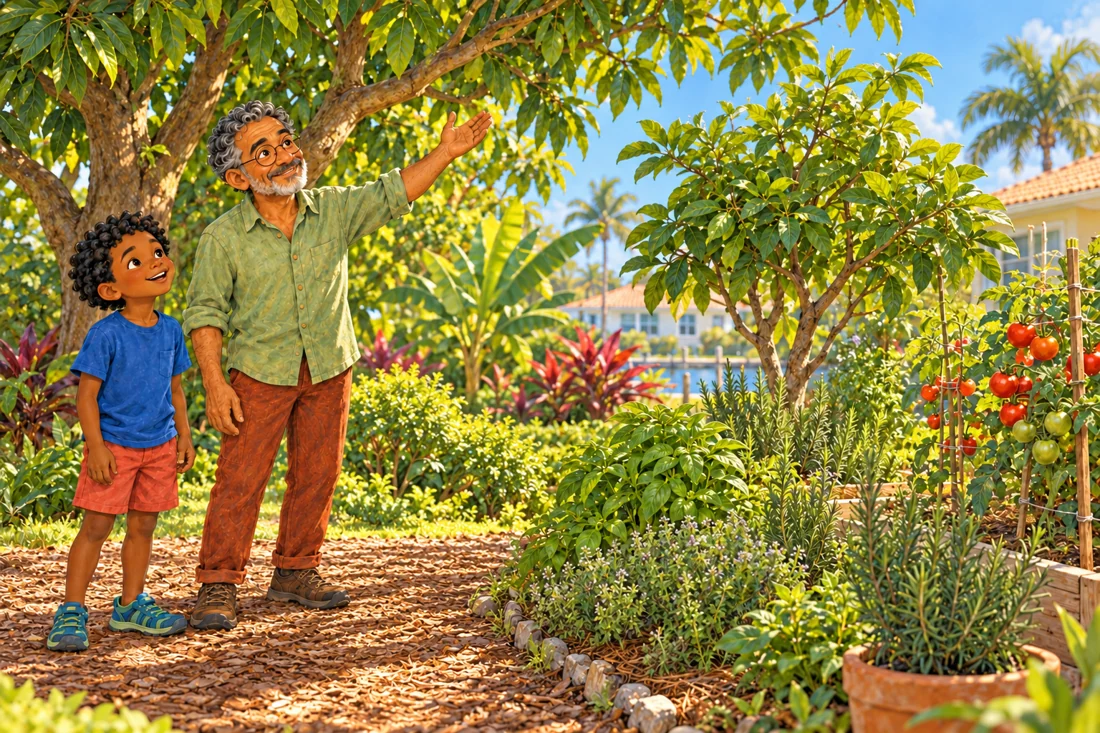
Choose your starting place
None is a required ladder. Choose the scale that fits your household, or keep exploring without a growing space.
A grown-up checks the container, drainage and locally appropriate seeds or plant. Follow its instructions for warmth, light, water and timing.
Ask the responsible adult or building manager about permission, safe placement, weight and wind. Children do not move heavy containers or lean over edges.
Adults check the site, materials, safe soil and access. Keep tools and construction adult-led; plan who will water and care for it.
Observe existing uses, sunlight and water before changing anything. Keep play, paths and access in the plan. Check utilities and soil safety with adults.
Start with one manageable area. Local advice helps choose suitable plants and future spacing. Adults identify food and supervise harvesting and preparation.
Plan layers only where light, space and local conditions suit them. Trees grow over years. Paths, water and ongoing care matter as much as planting.
Look before watering. Draw a change. Ask what the seed or plant needs. A result that surprises you can become the next question. No harvest is guaranteed.
Adults approve places, soil, plants, food and tools. No unknown tasting, insect handling or child pesticide mixing. Wash hands, supervise water and respect allergies.