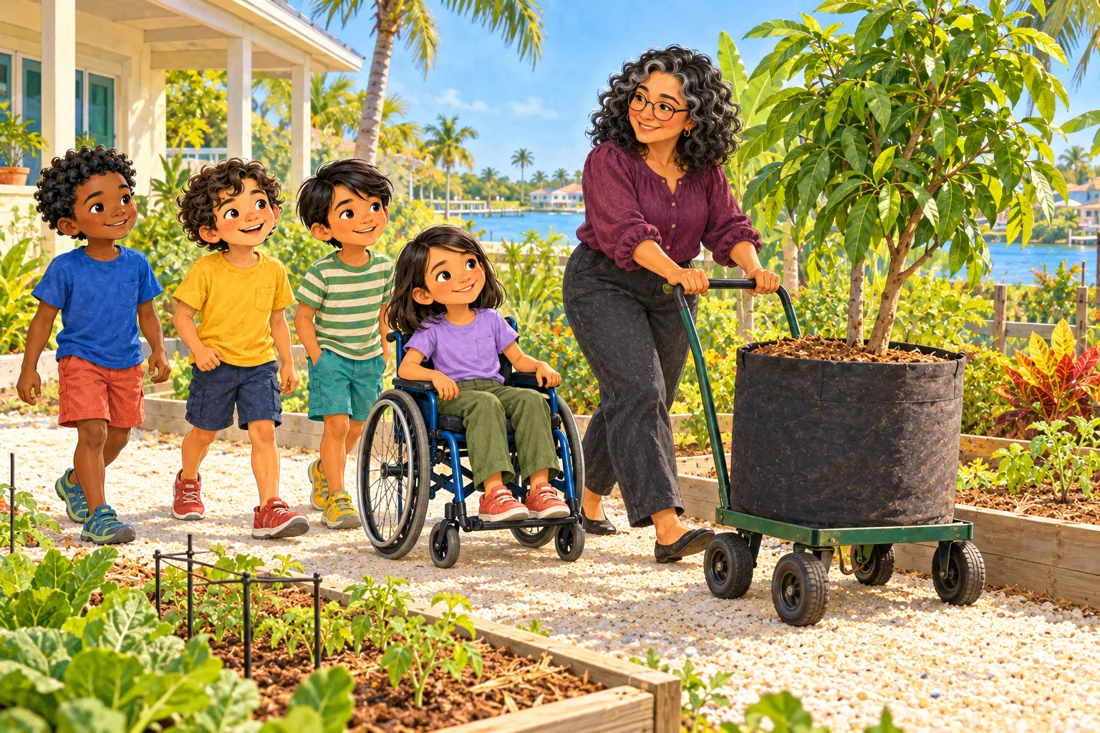
Talk about the story
What did Julian notice? What changed his idea? How did each friend help? Separate a prediction from something the children observed.
For teachers & learning groups
Turn an observation into a question, a drawing into a plan and a small project into an ongoing learning routine. Schools without garden land can join in, too.
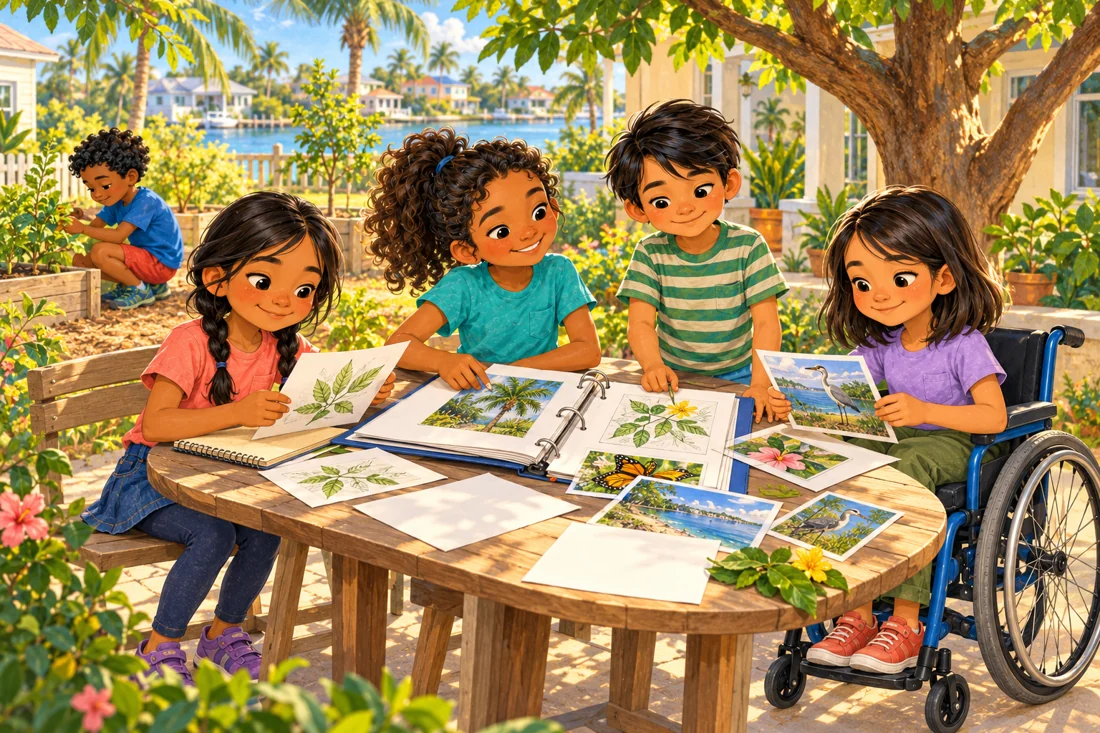
The story's school-learning payoff
By Book 10, the headteacher sees the learning in the children's work. Every class has weekly growing time with a teacher. Julian and his friends share ideas while adults support the school program.
Your group can begin on paper, with a staff-approved container or with careful observation. The design fits your place, resources and people.
Free teacher starterWhat did Julian notice? What changed his idea? How did each friend help? Separate a prediction from something the children observed.
Record leaf changes, compare suitable samples and watch plant needs over time. Use Mission 6’s matching-cup comparison with adult preparation; distinguish it from an uncontrolled garden observation.
Use Mission 9 to trace one adult-identified food’s journey from plant to plate. Classroom tasting is optional and requires school food-safety and allergy procedures.
Discuss soil, water, insects, plants and people. Observe pollinators from a safe distance without catching them. Some days no visitors appear.
Draw routes, reach and space. Include different ways of participating. Staff approve the site, materials, safe soil, water and any construction.
Choose a manageable pilot. Staff and school leadership arrange permission, resources, supervision and care during holidays. Build regular observation and reflection into the learning routine.
No land? Still plenty to learn.
Draw a local growing plan, observe a safe plant through a window, discuss a book illustration or use pictures for compost sorting. A container is optional and needs staff approval.
Never require children to bring food, seeds, photos or personal location details to participate. Keep records in class rather than submitting them to this website.